
Eating healthy sounds simple until a busy schedule, last-minute plans, and takeout cravings get in the way. This is where healthy meal prep for beginners can make a real difference.
Meal prepping does not mean spending your entire Sunday cooking complicated recipes. It simply means planning and preparing some of your meals or ingredients in advance so that healthy choices become easier during the week.
With a little planning and the right storage solutions from Fit & Fresh, you can prepare nutritious meals, control portions, reduce food waste, and spend less time worrying about what to eat.
What Is healthy meal prep for beginners?
Healthy meal prep is the process of planning, preparing, and storing meals or ingredients ahead of time.
A simple meal-prep routine can include:
- Washing and chopping vegetables
- Cooking grains such as rice or quinoa
- Preparing a protein source
- Making healthy snacks
- Portioning meals into containers
- Planning your meals for the week
The goal is not perfection. The goal is to make healthy eating more convenient.
Healthy Meal Prep for Beginners: Where to Start
If you are new to meal prepping, start small. Preparing five completely different meals for an entire week can quickly become overwhelming.
Instead, begin with 2–3 meals that are easy to prepare and store.
1. Plan Your Meals
Before buying groceries, decide what you actually want to eat during the week.
A simple meal can contain:
Protein + Vegetables + Whole Grains/Carbohydrates + Healthy Fats
For example:
- Grilled chicken + vegetables + brown rice
- Chickpeas + salad + whole-grain roti
- Eggs + vegetables + whole-grain toast
- Paneer + mixed vegetables + rice
Planning beforehand can also help you avoid unnecessary grocery purchases.
2. Create a Simple Grocery List
Once your meals are planned, make a grocery list based on those meals.
Focus on basic ingredients such as:
Protein: eggs, chicken, fish, paneer, tofu, beans and lentils
Vegetables: spinach, carrots, broccoli, cucumber, tomatoes and bell peppers
Carbohydrates: oats, brown rice, quinoa, potatoes and whole-grain bread
Healthy fats: nuts, seeds, avocado and olive oil
For general healthy-eating guidance, the Harvard T.H. Chan School of Public Health Healthy Eating Plate is a useful reference.
3. Prepare Ingredients in Batches
You do not have to cook every meal separately.
Instead, prepare ingredients that can be combined in different ways.
For example, you could prepare:
- One batch of roasted vegetables
- One protein source
- One grain
- A simple homemade dressing
Then mix and match them throughout the week.
This gives you variety without requiring completely different cooking processes every day.
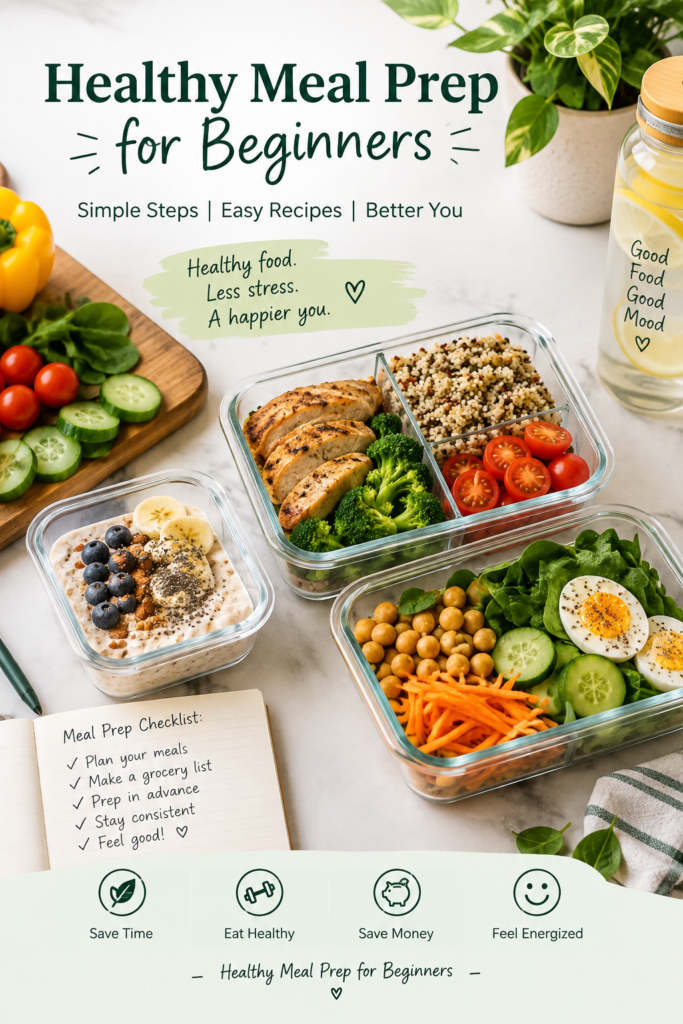
4. Use Portion-Friendly Containers
Food storage is an important part of meal preparation.
Fit & Fresh containers can be incorporated into your routine to help keep prepared meals organized and easy to carry.
Choose containers that are suitable for the type of food you are storing and follow the manufacturer’s instructions for refrigeration, freezing, reheating, and cleaning.
Keeping individual portions ready can also make it easier to grab lunch before heading to work or college.
5. Prepare Healthy Snacks
Meal prep does not have to be limited to breakfast, lunch, and dinner.
Preparing snacks in advance can help you avoid reaching for whatever is most convenient when hunger hits.
Some simple options include:
- Fresh fruit
- Yogurt with berries
- Nuts and seeds
- Carrot and cucumber sticks
- Roasted chickpeas
- Homemade energy bites
Keep portions ready in advance so they are easy to grab when you need them.
6. Keep Your Meals Interesting
One common reason people stop meal prepping is boredom.
You can use the same basic ingredients while changing the flavors.
For example, cooked chicken can become:
- A rice bowl
- A salad topping
- A whole-grain wrap filling
- A protein-packed sandwich
Try different herbs, spices, dressings, and vegetables to create variety without making meal prep complicated.
7. Follow Safe Food-Storage Practices
Preparing food in advance also means paying attention to food safety.
The U.S. Food & Drug Administration provides detailed guidance on storing and handling food safely. You can read its Food Safety at Home guidelines.
When storing prepared food:
- Refrigerate perishable foods promptly.
- Keep your refrigerator at a safe temperature.
- Use clean containers and utensils.
- Label meals when necessary.
- Follow recommended storage times.
- When in doubt about whether food is safe to eat, throw it out.
Easy 3-Day Healthy Meal Prep Example
If you are completely new to meal prepping, try this simple three-day plan:
| Meal | Day 1 | Day 2 | Day 3 |
|---|---|---|---|
| Breakfast | Overnight oats | Eggs & toast | Yogurt & fruit |
| Lunch | Chicken rice bowl | Paneer wrap | Chickpea salad |
| Snack | Apple & nuts | Yogurt | Roasted chickpeas |
| Dinner | Vegetable & chicken bowl | Dal & brown rice | Paneer & vegetables |
This approach keeps the process manageable while still giving you enough variety.Essential for healthy meal prep for beginners.
Common Meal-Prep Mistakes Beginners Should Avoid
Preparing Too Much Food
You do not need to prepare an entire week’s meals on your first attempt. Start with a few days and increase gradually.
Choosing Complicated Recipes
If a recipe takes hours to prepare, you may not want to repeat the process. Start with simple recipes that fit your lifestyle.
Ignoring Storage
Even nutritious food can become inconvenient if it is difficult to store or transport. Use practical containers and organize your refrigerator.
Forgetting Variety
Eating exactly the same meal every day can become boring. Prepare versatile ingredients that can be used in different combinations.
Make Healthy Eating Easier With Fit & Fresh
The purpose of healthy meal prep for beginners is not to create a perfect diet. It is to create a routine that makes nutritious choices easier.
Planning meals, preparing ingredients in batches, keeping portions organized, and storing food properly can save time during busy days.
Fit & Fresh products can complement this routine by giving you practical options for storing and carrying your prepared meals and snacks.
For more ideas, explore our Fit & Fresh healthy eating guides and meal-prep tips.
Final Thoughts
Healthy eating becomes much easier when you remove unnecessary decisions from your day.
Start with a few simple meals, make a realistic grocery list, prepare ingredients in batches, and store your portions properly. As you become more comfortable, you can experiment with new recipes and create a meal-prep routine that works for your lifestyle.
Remember: successful meal prep is not about making every meal perfect. It is about making the healthier choice the easier choice. Quickly start with healthy meal prep for beginners .